Motorcycle accident first aid: what to do if you see a crash
If you see a motorcycle crash: make the scene safe so nobody else gets hit, call 911 in the US (000 in Australia), leave the rider’s helmet on and do not move them unless they are in immediate danger. Check that they are breathing, press on any bleeding wound and look for an emergency QR code on the helmet with their blood type, allergies and contacts.
Updated on · By Pablo Porras (ChamoenMoto)
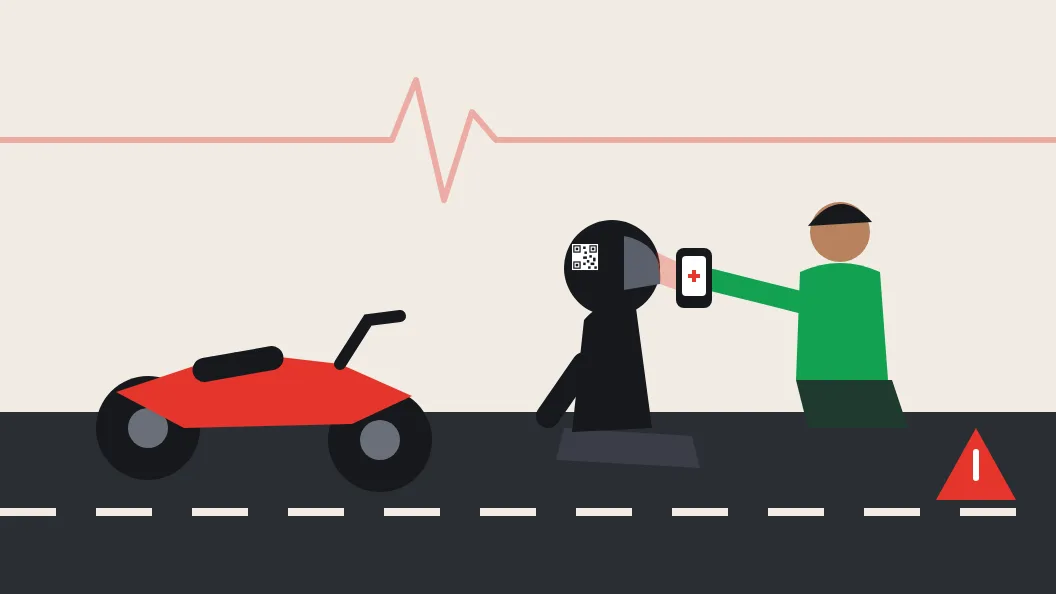
What should you do in the first few minutes?
First-aid courses teach a simple order: Danger, Response, Airway, Breathing, Circulation (DRABC). It keeps you from the most common mistake, which is running to the rider without watching the traffic.
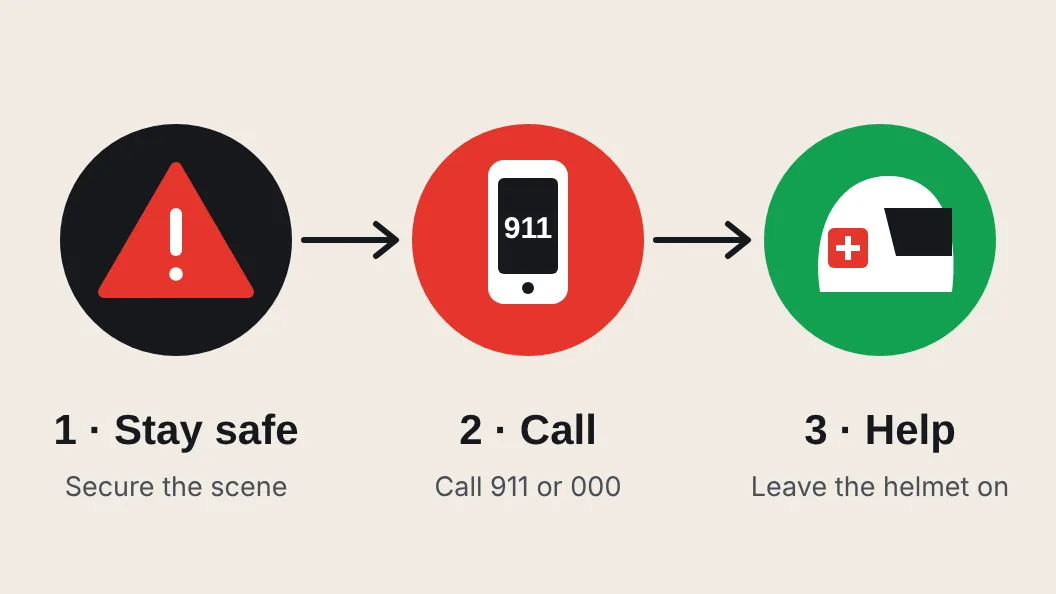
- Danger. Stop somewhere safe, turn on your hazard lights and warn oncoming traffic. Switch off the bike’s engine if it is still running and do not smoke nearby: there may be spilled fuel.
- Call for help. Call the emergency number for the country (table below). Give the exact location, how many people are hurt, and whether they are conscious and breathing.
- Response. Talk to the rider without moving them. Ask their name and where it hurts.
- Airway and breathing. If they do not respond, check whether their chest rises and falls. You can lift the visor to see and hear better.
- Circulation. If they are bleeding, press a clean cloth firmly on the wound and keep pressing.
- Find their medical info. Look at the helmet, tank or fender: if there is an emergency QR code, scan it with your phone camera and show the details to paramedics when they arrive.
Which number should you call?
Call yourself, even if other people are holding their phones: everyone tends to assume someone else already called.
| Country | Number | Covers |
|---|---|---|
| United States | 911 | Ambulance, police and fire |
| Australia | 000 | Ambulance, police and fire |
| Colombia | 123 | Single emergency line (all Colombian numbers) |
| Venezuela | 911 | Integrated emergency system, VEN 911 (all numbers) |
Have this ready before they answer: the address, mile marker or a landmark, how many people are hurt, whether anyone is unconscious or not breathing, and whether there is fire or fuel on the road. Stay on the line until the dispatcher tells you to hang up: they will often coach you through what to do.
Should you remove a motorcycle helmet after a crash?
No. A full-face helmet should only come off if the rider is not breathing or their airway is blocked and they need resuscitation. Otherwise, removing it can make a neck or spinal injury worse. This is the guidance in the New South Wales Government’s first-aid advice for motorcyclists.
- You can lift the visor to talk to the rider and check their breathing without moving their head.
- If the rider wants to take it off, ask them to wait for paramedics.
- If it truly has to come off for CPR, it takes two people: one holds the head and neck steady while the other removes the helmet with as little head movement as possible.
Should you move the rider?
Only if staying put is more dangerous than moving: fire, fuel near a heat source or traffic that cannot be stopped. In that case, move them as one unit, with several people keeping the head, neck and back in line.
If they are unconscious but breathing, leave them as they are and keep watching their breathing. If they vomit, roll them onto their side together, again as one unit, so they do not choke.
How do you find their blood type, allergies and family?
This is the exact problem Pablo Porras, founder of MásVidas, saw at another rider’s crash during a trip: nobody knew who to call, and paramedics had no blood type, drug allergies or insurance details. There are three places to look:
- An emergency QR code on the helmet or bike. Anyone can scan it with a phone camera, no app needed. It shows the details the rider chose to make public and has a button to alert their family. We explain it in what is an emergency QR code.
- A medical ID bracelet or tag. It usually carries one engraved condition, such as diabetes or a severe allergy. We compare both in QR code vs. medical ID bracelet.
- The phone’s Medical ID. iPhone and Android can show it on the lock screen, but you need to know where to look, and the phone has to survive the crash.
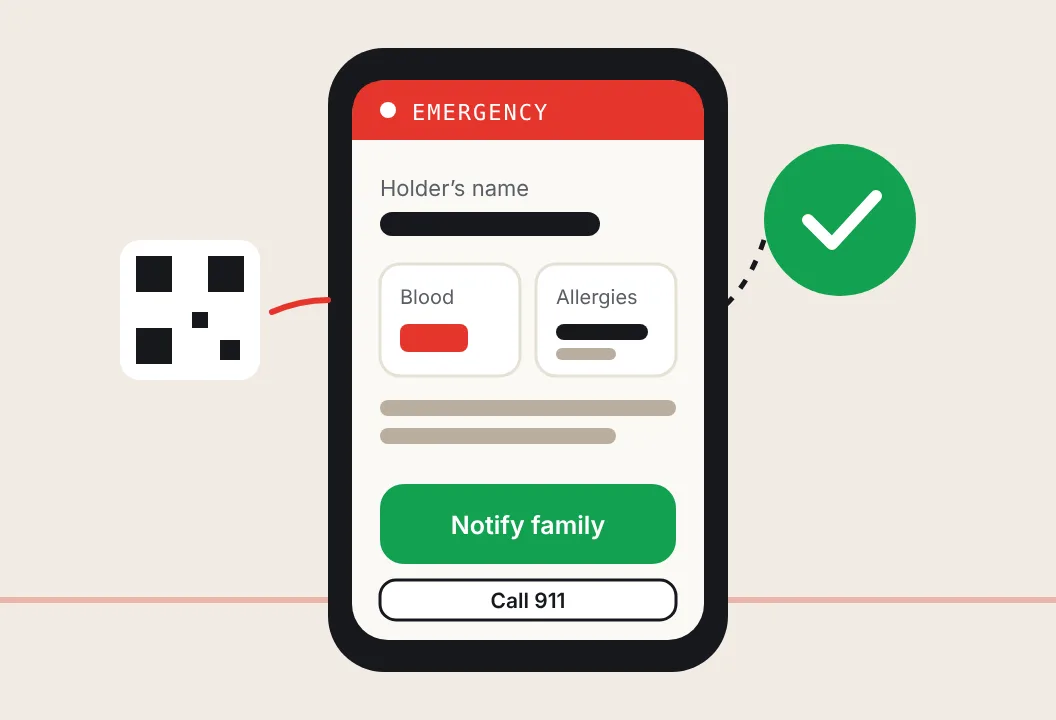
Do not go through the rider’s wallet or pockets looking for documents: leave that to police and paramedics. An emergency QR code exists so nobody has to.
What should you not do?
- Do not remove the helmet unless they are not breathing and need CPR.
- Do not move them or sit them up, even if they say they are fine: adrenaline hides pain.
- Do not give them water, food or medication. They may need surgery.
- Do not leave them alone until the ambulance arrives.
- Do not film or post photos. Their family should not find out on social media.
- Do not put yourself at risk. A second casualty helps no one.
What if you are the one who crashed?
- If you can move, get off the road to somewhere safe. If you cannot, stay still and ask for help.
- Keep your helmet and jacket on: they protect and support you.
- Call the emergency number yourself, or ask someone to do it.
- Get checked by a doctor the same day even if you feel fine: some internal injuries do not hurt at first.
- Keep your insurance policy number in your medical profile so it is at hand. Riding in Colombia? See what SOAT covers.
Why do the first few minutes matter so much?
Because riders are the most exposed people on the road. In the United States, 6,366 motorcyclists died in 2023, 16% of all motor vehicle crash deaths, according to the IIHS. In Colombia, 5,146 motorcyclists died in 2024, 62% of all 8,271 road deaths, according to preliminary figures from the national road safety observatory.
Calling quickly, not making injuries worse and handing paramedics the rider’s blood type and allergies are three things any bystander can do without medical training.
Frequently asked questions
Can I give an injured rider water?
No. Even if they are conscious and ask for it, wait for paramedics. If they have internal injuries they may need surgery, and water or food in the stomach complicates anesthesia. If their mouth is dry, you can moisten their lips with a cloth. Meanwhile, keep talking to them, keep them warm and still, and watch their breathing until the ambulance arrives.
What if they are unconscious but breathing?
Leave them in the position they are in, with the helmet on, and keep checking that they are breathing until the ambulance arrives. If they vomit or choke on blood, roll them onto their side with several people, as one unit, keeping the head, neck and back in line. Tell the dispatcher about any change: they will tell you what to do.
What if they are not breathing?
Tell the dispatcher right away: they will coach you through CPR until the ambulance arrives. To do CPR, the helmet has to come off with two people, one supporting the head and neck. If you have never learned CPR, follow the dispatcher’s instructions, and consider taking a first-aid course with the Red Cross or St John Ambulance.
How do I reach the rider’s family?
Look for an emergency QR code on the helmet, tank or fender and scan it with your phone camera. If it is a MásVidas code, tap the button to notify their family: their contacts get an alert with the location and your details so they can call you, without you seeing their numbers. If there is no QR code, let the police contact the family.
Sources
- IIHS, Fatality Facts 2023: Motorcycles and ATVs.
- New South Wales Government, First aid for motorcyclists.
- Colombia’s national road safety observatory, preliminary 2024 figures, reported by Autocosmos.
This guide is for information only and does not replace a first-aid course or the instructions of the emergency dispatcher. MásVidas is not an emergency service.