What to put on a medical ID
A medical ID should list, in this order: severe allergies, medications that change emergency treatment (such as blood thinners), medical conditions (diabetes, epilepsy, heart disease), implanted devices (pacemaker) and special instructions, plus your name and an emergency contact. That is the order the American College of Emergency Physicians recommends. Blood type is useful but secondary: the hospital always rechecks it.
Updated on · By Pablo Porras (ChamoenMoto)
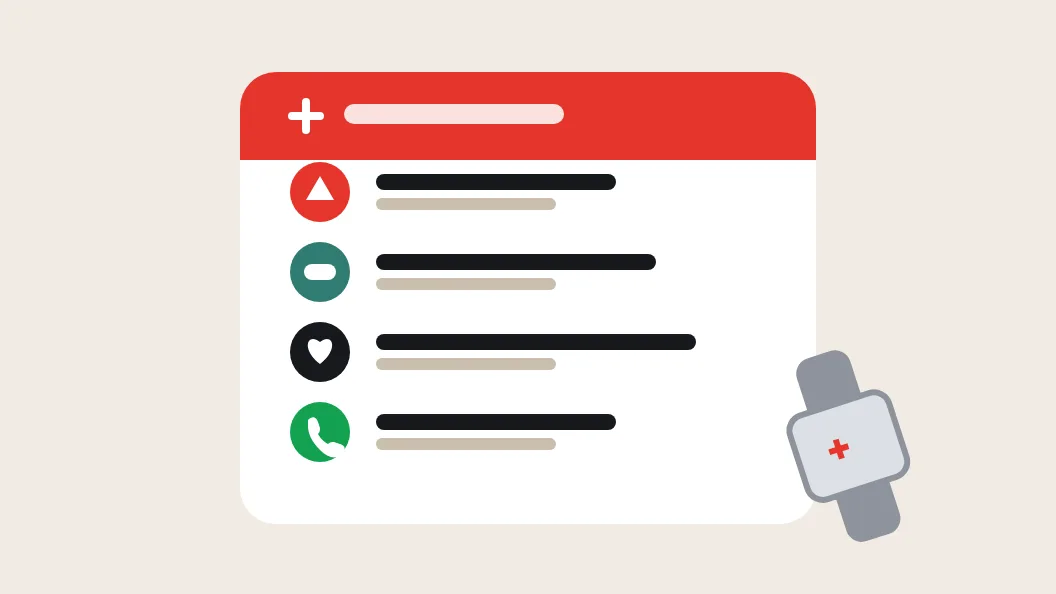
What goes on a medical ID, and in what order?
| Priority | What to include | Examples |
|---|---|---|
| 1 | Severe allergies | Only those that cause anaphylaxis or a severe reaction: penicillin, bee stings, latex. |
| 2 | Medications that affect treatment | Blood thinners (and which one), immunosuppressants, insulin. |
| 3 | Medical conditions | Heart disease, diabetes (type 1 or 2), epilepsy, dementia, severe asthma. |
| 4 | Implanted devices | Pacemaker, ICD, insulin pump. |
| 5 | Special instructions | “No MRI”, “carries EpiPen”. |
| + | Name and emergency contact | Full name and a number that answers 24 hours a day. |
MedicAlert, citing the American College of Emergency Physicians (ACEP), puts it simply: only the most critical information goes on your ID. Everything else —history, past surgeries, your doctor— belongs in an online or digital profile.
Should you put your blood type on a medical ID?
You can, but it is not the priority. Two hematologists —Dr. Andrew Eisenberger of Columbia and Dr. Kristen Rice of Sharp HealthCare— agree that the blood bank always rechecks your type before a transfusion, and that in severe bleeding with no time to test, type O blood is given.
What does change care in the first minutes is knowing you are allergic to a drug or on blood thinners. If space is limited, prioritize that.
Who should wear a medical ID?
- People with allergies that can cause anaphylaxis.
- People taking blood thinners, insulin, steroids or immunosuppressants.
- People with diabetes, epilepsy, severe asthma, heart disease or a bleeding disorder (hemophilia, von Willebrand disease).
- People with a pacemaker, ICD or other implanted device.
- People who may have trouble communicating in an emergency.
- And anyone doing risky activities, like riding a motorcycle, even if healthy: an emergency contact and allergies help everyone.
Where should you carry your medical ID?
| Option | Strength | Limit |
|---|---|---|
| Engraved bracelet or tag | Always on you, no battery needed | Few characters; changes mean a new engraving |
| Phone medical ID | Free; visible on the lock screen if enabled | Useless if the phone dies, breaks or is thrown clear |
| Wallet card | Cheap and low-tech | Rarely the first thing anyone looks for |
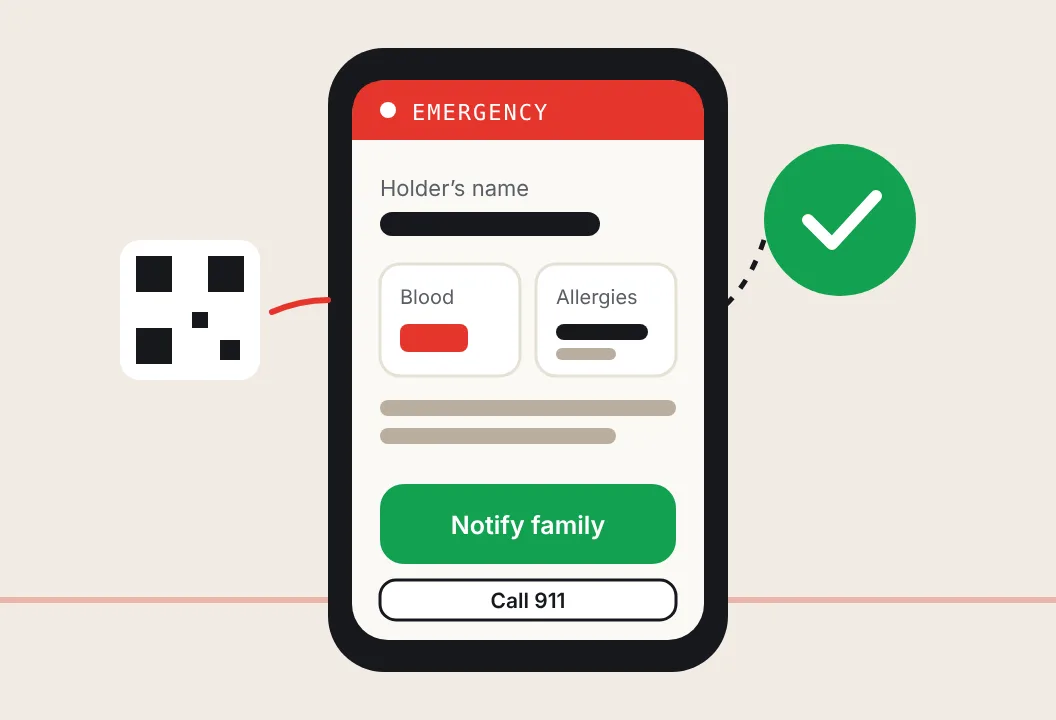
| Emergency QR code on the helmet | Holds the full profile; updates without a new sticker; alerts your family | Someone has to scan it with a phone |
The best setup combines two: something that is always on you and something visible at the scene. See QR code vs. medical ID bracelet and how to enable your phone’s medical ID in ICE emergency contacts on your phone.
How often should you update it?
Whenever something important changes: a new medication, a newly discovered allergy, a diagnosis, a new number for your emergency contact. A good habit is to review it once a year, for example on your birthday or when you renew your bike insurance.
What should you leave off?
- Details that do not change emergency care, such as resolved past surgeries: they take space and distract.
- Full ID numbers, home addresses or bank details. The person helping you does not need them.
- A do-not-resuscitate wish without valid paperwork. In the US, MedicAlert notes that responders are not bound by an engraving without a valid state DNR form signed by a physician.
Frequently asked questions
What should I put on a medical ID if I have no conditions?
Your name, an emergency contact who always answers and, if you know them, your blood type and any drug allergies. Also write “no known allergies” and “no medications”: for a paramedic, knowing there is nothing to worry about is useful information. If you ride, add your health insurer so the hospital knows who to bill later.
Should I put my organ donor status on my medical ID?
We found no medical authority that recommends engraving organ donor status, and it does not change emergency treatment. In the US, donor registration is handled through your state registry or driver’s license, and the iPhone Health app has a separate organ donation setting. Use your limited space for allergies, medications, conditions and an emergency contact.
Is it safe to put my medical details behind a QR code?
It depends on how it is built. With MásVidas you decide which details are public when scanned and which stay private, and your contacts’ phone numbers never appear: whoever helps taps a button and MásVidas alerts them for you. The code also stores an offline version of your vital details for places with no signal. When something changes, you edit it in your dashboard without replacing the sticker.
Sources
- MedicAlert Foundation, Abbreviations and what to engrave (ACEP’s recommended order) and Blood thinners.
- MedicAlert UK, Medical ID engraving.
- ColumbiaDoctors, Do you need to know your blood type?, January 2026.
- Sharp HealthCare, How important is it to know your blood type?, June 2023.
- Baylor Scott & White Health, Who should wear a medical alert bracelet?, May 2024.
- MedicAlert Foundation, DNR and advance directives.
This guide is for information only and does not replace advice from your doctor, who knows best which of your health details are critical.