Motorcycle first aid kit: what to pack
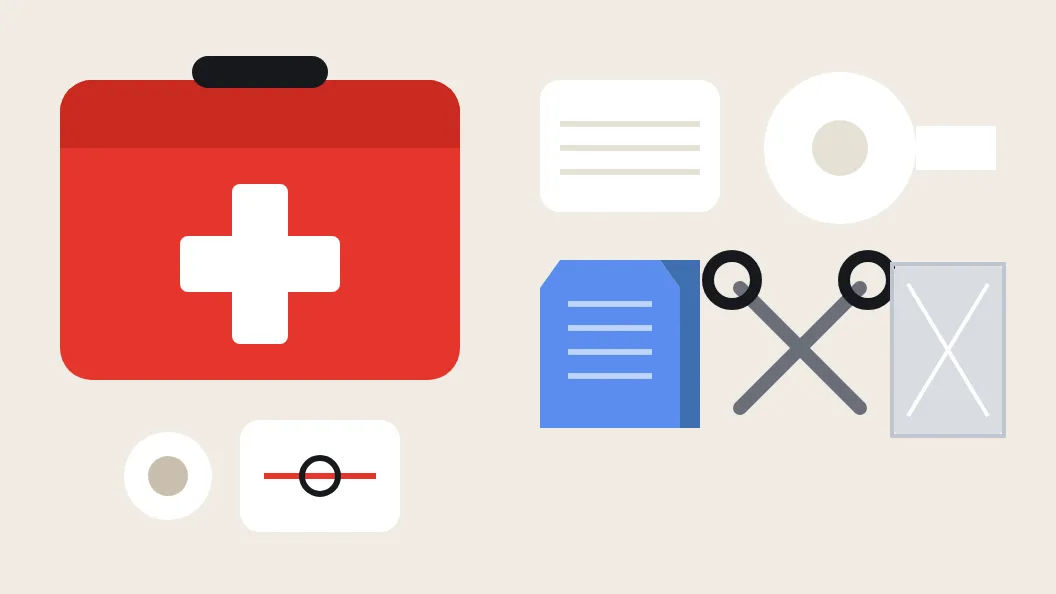
A motorcycle first aid kit should be small, waterproof and quick to reach, with what you need to control bleeding and protect an injured person until the ambulance arrives: gloves, sterile gauze, a trauma dressing, bandages, tape, shears, antiseptic wipes, a CPR barrier and a space blanket. What matters most is not in the bag: knowing first aid and leaving an injured rider’s helmet on.
Updated on · By Pablo Porras (ChamoenMoto)
What should a motorcycle first aid kit contain?
| Item | Suggested quantity | What for |
|---|---|---|
| Nitrile (latex-free) gloves | 2 pairs | Protect you and the casualty |
| Sterile gauze pads | 5 | Cover wounds and apply pressure |
| Large trauma or compress dressing | 1–2 | Bleeding: direct pressure |
| Roller bandage | 1–2 | Hold gauze and dressings in place |
| Triangular bandage | 1–2 | Immobilize an arm, make a sling |
| Adhesive tape | 1 roll | Secure dressings |
| Assorted adhesive bandages | 10 | Scrapes and small cuts |
| Antiseptic wipes | 5–10 | Clean minor wounds |
| Blunt-tip shears | 1 | Cut clothing, bandages or a backpack strap |
| CPR breathing barrier (one-way valve) | 1 | Give rescue breaths safely |
| Space blanket | 1 | Keep the casualty warm |
| Tweezers | 1 | Remove splinters or small glass |
The list combines the American Red Cross recommended kit and St John Ambulance’s small vehicle kit (UK, built to BS 8599-2), which is designed for motorcycles too. Add your own medication if you need it, such as an epinephrine auto-injector for severe allergies.
Should you carry a tourniquet?
Only if you are trained. St John Ambulance Victoria (Australia) puts it plainly: a tourniquet is a last-line measure for bleeding that is uncontrollable and life-threatening, used only by people trained to apply it. If you are not, apply firm, direct pressure to the wound and call for help. Most bleeding can be controlled with direct pressure.
If you do carry one, choose a commercial tourniquet and learn to apply it in a hands-on course.
What should you leave out?
- Cotton wool for open wounds: it sheds fibers.
- Medication to give other people. A casualty may be allergic, unconscious or need surgery; give nothing by mouth.
- Expired items. Check dates and replace what you use.
- A huge kit. If it does not fit on the bike, it stays at home.
Where should you carry the kit on the motorcycle?
- In a waterproof or zip-lock bag, ideally clear or brightly colored.
- Somewhere quick to open: a pannier, top case, tank bag or under the seat.
- If you ride in a group, tell your companions where it is and what is in it.
- Check it every six months: heat and damp ruin adhesives and packaging.
Is a first aid kit required on a motorcycle?
In most places it is not a legal requirement for motorcycles, but rules vary by country, so check yours. In Colombia it is a grey area: the National Traffic Code requires a first aid kit as part of the road equipment of every vehicle, but Ministry of Transport opinions reported in the press say motorcycles are not obliged to carry it, and no rule defines what the kit must contain. We found no such requirement in Venezuela.
What matters more than the kit?
- Knowing first aid. In the UK, fire and rescue services run Biker Down, a free course for riders covering severe bleeding, CPR and helmet removal. Elsewhere, the Red Cross and similar organizations run first aid courses.
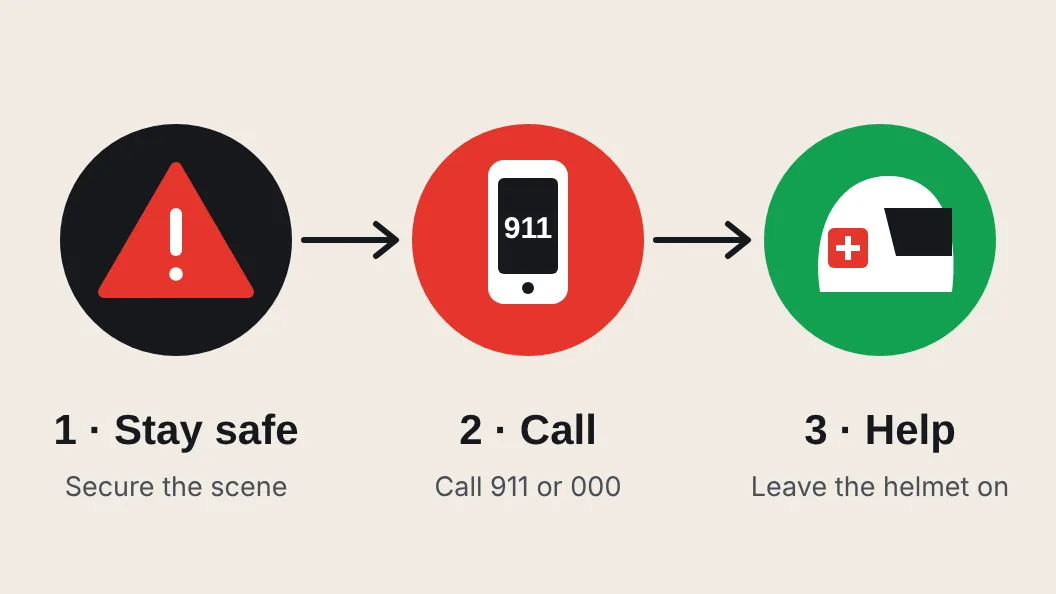
- Knowing what to do in the first minutes. Read our motorcycle accident first aid guide.
- Making sure whoever helps knows who you are. An emergency QR code on your helmet shows your allergies and blood type and lets them alert your family.
Frequently asked questions
What should a small motorcycle first aid kit include?
The minimum to control bleeding and protect a casualty: two pairs of nitrile gloves, sterile gauze, a trauma dressing, a roller bandage, tape, blunt-tip shears, antiseptic wipes, a CPR barrier and a space blanket. It all fits in a waterproof bag the size of a paperback. Add your personal medication if you need it.
Should you remove an injured rider’s helmet?
No, unless they are not breathing and need CPR. Removing a helmet without proper technique can worsen a neck or spine injury. If they vomit, several people roll them onto their side as one unit, helmet on. If the helmet really must come off, it takes two people: one supports the head and neck while the other removes it. That is why a first aid course is worth taking.
How often should you check your motorcycle first aid kit?
Every six months and after every use. The American Red Cross recommends checking expiry dates and replacing anything used. On a motorcycle, sun, rain and vibration also wear out packaging and the adhesive on tape and bandages. Use the same check to update your emergency medical profile, so the details on your helmet or phone stay current too.
Sources
- American Red Cross, Anatomy of a first aid kit.
- St John Ambulance (UK), Life-threatening bleeding, April 2025.
- St John Ambulance Victoria, First aid for severe bleeding: tourniquets, February 2026.
- Shropshire Fire and Rescue Service, Biker Down.
- Colombian Ministry of Transport, Opinion 20231340401671 (kit contents), in Spanish.
This guide is for information only and does not replace a first aid course. In an emergency, call your local number: 911 in the US, 999 in the UK, 000 in Australia.